Tell readers the story is over

Like us novelists, readers want validation.

We want others to confirm our genius.

Readers just want you to confirm that the story is over.

The validation readers need comes at the end of your story. It’s the scene or scenes following the climax, after the main plot closes.

You must provide a clear signal that the story is over. For good or ill, the adventure is done.

In Star Wars it’s the awards ceremony, where Luke, Han, and Chewbacca receive medals from the rebel alliance in recognition of their heroism.

In thousand upon thousands of other movies, it’s the scene where the main couple kiss and everyone looks on, smiling at each other. Every side character gets a few seconds on screen, smiling, clapping, dabbing a tear. This signals that yes, everyone and everything is accounted for. Even the dog we saw once in Act II comes in and barks happily.

This is where any remaining open loops need closing.

If you feel like your book is over but you don’t feel like you’ve nailed the ending, this may help you sort it out.

But there’s another big moment you should acknowledge when you finish your first draft.

And that is your accomplishment of finishing it. Regardless of what you think of your story, celebrate the achievement of this important milestone.

For just a few hours or days, sit in the glow of having done it.

If I’ve convinced you of nothing else, I hope you’ve at least entertained the idea that writing doesn’t have to be like pulling teeth, or tedious drudgery. If we are to spend so many hours doing it, it’s only sensible to do it in an enthusiastic state.

Cliffhangers work, use them

Readers say they hate cliffhangers.

But readers reward cliffhangers . . . at the end of chapters.
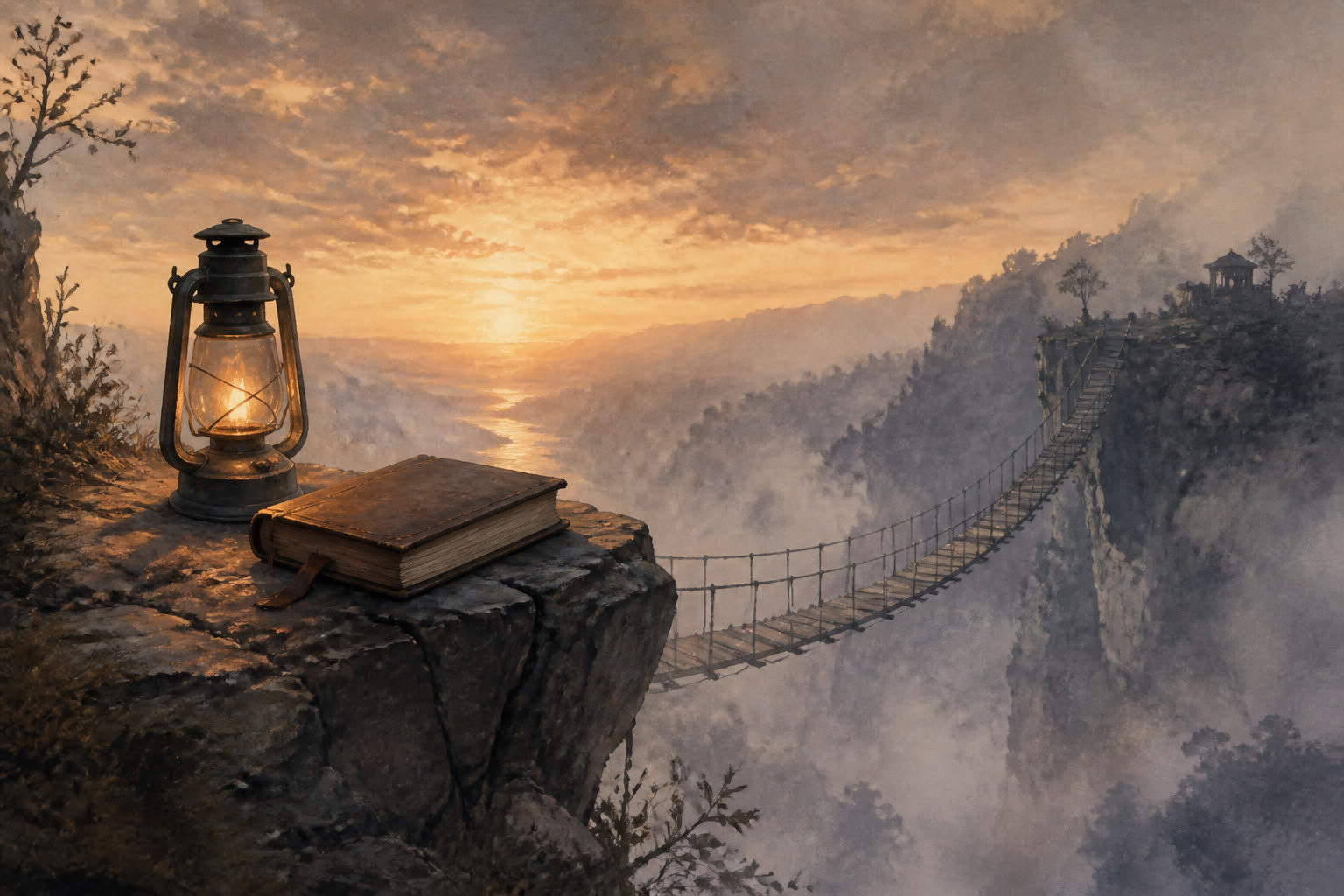
There are all sorts of cliffhangers, and you can use them throughout your book to create suspense, intriguing confusion, and surprise.

At the end of every scene and/or chapter, end with a Tease, Twist, or Unresolved moment.

The Unresolved Moment is the typical cliffhanger.

Your hero is chased by rabid wolves to a cliff, where he nearly falls and is hanging by one hand while the wolves slobber over his head. Below, flaming snakes hiss and writhe, eager to bite, burn, and consume him alive. [End scene.]

The reader absolutely must start the next chapter.

Or the love interest gets down on one knee and produces a ring box. [End scene.]

The reader has to start the next chapter.

The Unresolved Moment makes the reader keep reading To find out what happens.

These sorts of chapter endings can feel heavy handed, so mix it up.

The Tease leaves a different sense of unresolvedness.

At the end of an argument scene, the hero’s teenage daughter answers her phone. Then drops it and says, “Oh my god. I got it.” [End scene.]

What did she get? We have to know.

Or maybe we know from context that she got the lead in the school play. But now we want to see immediately how this changes her next day at school. Do the Mean Girls give her stink eye? Does her Charming Crush who’s All Wrong for Her suddenly shower her with attention? Does her bestie get jealous? I MUST KNOW!

The Tease makes the reader keep reading to learn What does this mean?

The Twist is similar, but it sends the plot in a much more unexpected direction. Same scenario, but the daughter puts down the phone and stares in shock at her father. He says. “Did you get the part?” And she says, still dazed, “Not the one I tried out for. I got the lead.”

Or in a thriller, maybe we’re at the end of a legally dubious break-in by our maverick detective. She’s finally gotten into an office where she planned to copy the villain’s hard drive to a USB stick. But when she starts the download, she notices a photo on the desk. It’s not of the villain and his socialite wife. It’s of the villain and the detective’s mother! End scene.

The Twist makes the reader keep reading to find out What just happened?

What follows these end scenes?

If you’re mean like me, you keep the cliffhanger alive for a while by changing viewpoint characters and building to another cliffhanger. Then switch back to the first character and repeat the cycle.

But it’s fine to just jump right into the next chapter where the last one left off. Because as the reader compulsively leaps over a chapter break to start the next, they get the sensation of I Can’t Put This Book Down.

There are subtler forms of these cliffhangers. If you’re ending a somber scene, where your main character is reflecting on the disaster that has come from their choices, you might have an interior monologue of sorts that poses a thematic question, or conveys the character’s internal conflict, ending at a point where the reader is curious about what choice will the character make next.

Or the last line could simply be, She shouldered through the crowd and fled, leaving her guitar behind, leaving the cheers of her fans behind, leaving everything behind.

Doesn’t look like a cliffhanger, and it surely doesn’t have that same pace-driving feel. But if that’s the end of a chapter, the reader will feel a question. Maybe we know she’s fleeing because of bad news she received earlier, or because she’s performing a type of music she doesn’t respect. Knowing why she flees doesn’t answer where is she going? If we care about this character, that ending will force us to keep reading.

Or say your band of fantasy characters have found the secret entrance to a hidden valley. End the scene as they cross through, but don’t reveal what they discover until the beginning of the next chapter.

Or have them go through and show their reactions, but not what they see.

Or have them go through and show the wondrous vista and then have the sage wizard speak to them an ominous single line of ancient history. “And so we come to the realm of Glinok-Tyl, not seen by mortal eyes these six hundred years.” The hero blinks at the awesome beauty. “It doesn’t look dangerous.” And the sage says, “That, my young friend, is why it is dangerous. Touch nothing, stay close.” [End scene.]

Chapter endings are fun, especially during your revision process. And you’ll often discover you wrote past the ending. Find that spot of suspense and cut there.

Have you written a chapter-ending line that will make readers click that Kindle button to the next page?
Zoom out or cut away: spare your readers to keep them reading

I can’t watch gross-out tv shows or movies.

I don’t like close-ups of extreme emotional anguish either and most readers don’t either. But sometimes we have to write scenes of extreme events.

When we subject our reader to discomfort, we’re making a choice that might cause them to put the book down. This doesn’t mean we eschew difficult situations or topics in our novels. Quite the opposite.

If you’re writing horror, that’s what the audience wants.

But what if you’re not writing horror, or over-the-top brutality a la Quentin Tarantino?

There’s a technique that allows us to spare the reader the gory details so they can keep reading.

Zoom out or cut away.

And why would we want to do that? Well, we want them to keep reading, right? Just because an emotion or scene is “real” doesn’t mean anyone wants to suffer through it.

Imagine a scene in a PG movie, where the badguy has a kidnapped victim in his control. The ransom has been refused, and he’s going to make an example by shooting the victim in the head.

What does the filmmaker do? How does she convey the murder?

Not with a gruesome close up. Not even a quick blast and splatter.

The filmmaker might show a close up of the villain’s face, we hear the gunshot, and then the drop of a body. But we don’t see it.

OR the filmmaker zooms out to a wide shot of the warehouse and we see a flash in one window as the gun goes off.

OR the scene cuts to next morning as cops throw a sheet over the body on a gurney.

These choices spare the viewer the gross-out and the high-discomfort of such a moment to different degrees. Remember, I said it was PG. So, generally okay for older kids to see.

In a Tarantino film, we see a lot more viciousness and blood.

So this choice is about audience.

Let’s look at a different example. In Steven Spielberg’s Saving Private Ryan , the audience is subjected to horrific WWII battle scenes, bodies blown to bits, shaky cam, confusion, explosions, gore, death, hopelessness.

And that’s just the opening ten minutes of the movie.

But later, when a pastor and army officer drive up a long farmland driveway to tell a mother that three of her four sons have been killed in action, Spielberg doesn’t show us her hearing the news.

He shows everything leading up to it.

He shows her collapsing in the doorway before the men have even gotten to the house. She knows what this visit means. We don’t hear her scream or sob. We’re behind her, we can’t even see her face in this moment.

The scene cuts away, respectfully, so she can mourn in privacy.

We’ve been spared the full barrage her agony. This sort of distancing is a kindness to the audience, and when handled deftly, adds enormous heft to the moment.

Watch it, imagine this in prose.

We want our audience to be moved, feel joy and pain, experience the range of emotion a story provides. But we don’t want them putting the book down. We don’t want our audience so repulsed by the telling that they miss the story.

Contrast this to the death of Boromir in The Fellowship of the Ring. We see every arrow strike, we see Aragorn comforting him, hear Boromir’s final words. Not a dry eye in the theater when I saw it. So why did director Peter Jackson keep us so close? Why didn’t he cut away to spare us?

Boromir tried to steal the ring from Frodo just prior to this, an act he instantly regretted when he realized the effect the ring had on him.

So when the hobbits Merry and Pippin are beset by orcs, we need to witness his valor and thereby earn his redemption. But note that Jackson keeps it fairly bloodless. He’s not trying to gross us out because that would draw our focus away from the emotion of the moment.

Put these ideas in your creative toolbox, and the next time a scene of extremely uncomfortable emotion or repulsiveness comes up, you can choose to zoom out or cut away. Show the shadow of the stabbing taking place, rather than the stabbing itself. Or cut to the POV of someone else disturbed by the sound of screams. Or cut to the next day when the body is found. All valid choices.

Or . . . show it all in excruciating detail. Whatever is appropriate for your audience.

Practice your skills, and publish your practice

I’m surprised by how many writers I meet who misunderstand the 10,000 hour rule.

Popularized by Malcolm Gladwell in his quadrillion selling “Outliers,” the idea is that a person needs 10,000 hours of intentional practice to master a complex skill like playing an instrument.

My response: who cares?

Gladwell’s premise seems to have been inspired by a paper by Anders Ericsson in the Harvard Business Review.

The upshot of the paper: “Consistently and overwhelmingly, the evidence showed that experts are always made, not born. These conclusions are based on rigorous research that looked at exceptional performance using scientific methods that are verifiable and reproducible.”

That’s great news.

It tells us that skill is not reliant on talent. Talent is fundamentally having an interest in something. If you are attracted to it, you’ll have a keener interest in the subtleties, and therefore a better knack for mimicking good work.

This is why I only compliment people on their skill, never their talent. Skill is the product of work, dedication, and persistence.

But this doesn’t mean we must wait to share our work until we’ve put in our 10,000 hours.

This leads to a much more important book for creatives: Show Your Work by Austin Kleon.

We live in an age where it is possible to go right around all the old, traditional gatekeepers that stood between us and our audience. And you can attract an audience by sharing your progress. Share your journey and let people watch you grow as an artist.

I encourage you to buy Show Your Work in paperback, not ebook. It’s a little, square book, with illustrations and very short chapters. The sort of thing you can pick up and dip into to discover inspiration. I’ve read it many times and I recommend it to everyone.

Forget talent. Practice for skill, and publish your practice. A fulfilling creative life isn’t about the chore, but about the journey.

My novel hates me and refuses to end

The best advice I ever heard about writing endings was this:

“If you can’t write your ending, read your beginning.”

Do yourself a favor and refresh your memory on the first couple chapters, especially the opening pages of your novel, and ask:

Where is this taking place? Does your character need to return here for the story to feel complete?

What was your main character thinking? Are those thoughts different now? Relevant, irrelevant?

What was your main character’s problem? Is it resolved? Has your MC gained a new understanding and acceptance?

Did an external event throw your character’s world out of kilter? Is a “new normal” established, and has the passing of the old normal been acknowledged?

Not every question will be relevant, but a couple of them should be. You don’t need to think too hard about these, just ask them and answer them quickly. Let your creative mind ponder them.

The direct answer isn’t what you need to write. They just give you the loose end of a thought thread you can follow to your ending.

Readers don’t keep track of plots as a whole. But just as you have a creative mind, they have a simulated world in their subconscious mind. It knows when an ending is lacking, even if they can’t say what. It’s just a feeling.

Often that sense of incompleteness is because one of the above questions wasn’t answered clearly enough. Those questions are posed in the beginning of the story, so go find them and answer them.

You might be surprised, once again, to discover your accidental genius was already planting the seeds you now need to reap.

The final battle is for your hero’s soul, not his life

I used to be too nice to my main characters.

I’d put them in danger, I’d subject them to fights they couldn’t win, I’d imprison them, and once I had aliens install a brain implant through my character’s nose.

But these sorts of discomforts and pains are first level pains. Readers can be intrigued by these problems, but they’re so used to reading them, they don’t feel especially moved by them.

You could write more graphic detail, the kind of thing people need to read with their hands over their eyes. And I suppose there are genres where that’s what readers are looking for.

But what we want readers to feel mostly is a desperate yearning for the main character to overcome, escape, and perhaps get revenge. In romance we want the couple to come together forever.

And it’s the doubt, discomfort, pain that makes that payoff . . . well, pay off.

Enter the Dark Night of the Soul, the nadir of the character’s arc, the low point of all low points, rock bottom, the last hope of victory is extinguished.

I’ve noticed three reasons why writers wimp out:

  • Writers are fond of their characters and are too soft on them
  • Writers fear putting characters into a hopeless situation because they don’t know how to get the characters out of it
  • Writers fear that taking away hope will force a fundamental change on the world they don’t want to write

The psychology of the story is the psychology of the author, and there are caves we don’t want to enter.

But that’s where the path leads, invariably. The reader needs you to go in there and take them with you.

If your main character dies, you’ve written a tragedy. That’s fine, and if you’ve signaled to the reader that this is what’s happening, they will accept it. If you’re writing a romance, you will alienate readers, who want a Happily Ever After.

Or maybe your main character dies and is resurrected, literally or figuratively. It’s hard to literally kill your main character without a deus ex machina resurrection. So we kill them metaphorically by taking their power, killing (or appearing to kill) their loved ones, and showing the villain’s victory.

In Writing the Blockbuster Novel Albert Zuckerman notes that the hero must fall into the power of the villain. He’s been captured, gun taken, hands bound, surrounded by guards.

All these tropes are designed to create the enormous emotional contrast when the hero gets free and vanquishes the villain.

Indiana Jones fails to keep the Ark of the Covenant out of the Nazi’s hands. He and his girlfriend Marion are captured, tied up, and forced to witness the relic being opened.

Whip snapping, gun shooting, and fist fighting got him this far, but it’s his knowledge as an archeologist and his respect for historical relics (“It belongs in a museum!” he tells Belloq about the Aztec idol at the beginning) and his experience that all treasures have traps, that saves him. “Don’t look at it!” he tells Marion.

It requires sacrifice. For Indy to survive he has to turn away from the mystery.

And there’s a bit of a hint for how to get your character out of that dark moment. Look to the qualities of their character, not their physical skills, to help them out of the darkest moment.

For Luke Skywalker to survive against Darth Vader in Empire Strikes Back , he can’t fight, his hand has been chopped off and his lightsaber lost. He doesn’t have enough command of the Force to beat Vader. But he has no way out except to join the Dark Side.

But he does have a choice, one that only a noble-hearted hero could make: to sacrifice himself by jumping to a probable death. (BTW, Han Solo is frozen in carbonite, giving the audience a worse-than-death horror to endure for THREE YEARS until the sequel came out. I remember, I was there!)

John McClane in Die Hard has to surrender to save his wife. Yes, he has taped a gun to his back, and he does use it once he’s Surrendered to Infiltrate the Fortress of the Villain, but this is totally in keeping with his New York cop street smarts.

In The Dark Knight , Batman chooses to take the fall for Harvey Dent’s “murder.” All his gadgets and fighting skills can’t fix the real problem: that the “White Knight” that was to clean Gotham up had gone bad and had to be killed. To preserve Dent’s reputation, Batman chooses to be seen as the villain. “Because he’s the hero Gotham deserves, but not the one it needs right now. So we’ll hunt him. Because he can take it. Because he’s not our hero. He’s a silent guardian, a watchful protector. A dark knight.”

Remember, you can scroll back in your manuscript and plant a few seeds that will blossom at just the right moment.

I wrote a novel and 5 characters had no reason to exist

Your hero has helpers. These characters make up his team.

I didn’t realize this when I wrote my first novel. I just threw names out and characters started having conversations and then plot happened.

But ten chapters in, I had these hangers-on, these useless louts who took up my brain power but didn’t do anything except run in fear when bigfoot burst from the forest.

It was too much to keep track of, and each had little mini plots going that were boring.

The solution was easy, if a bit tedious to execute. I had to merge some of them into a single character, and others I simply removed.

If someone had told me about teams, my creative mind might have known to fill out the roster more efficiently.

Your main character’s team will also help you, the writer.

If you’ve watched any TV cop show, you’ll quickly recognize that the hero has all sorts of experts they can call on to do stuff for them. Think of the specialists in Ocean’s 11. You’ve got the master of disguises guy, the technology nerd, the suave con-man, the stealthy ninja.

Or how about The Fellowship of the Ring. Frodo is aided by a wise wizard, a burly strong dwarf, a noble ranger, a deadshot elf archer, and his loyal friend Samwise.

Remember the A-Team? It was an awesomely silly 1980s action show about a band of Vietnam vets, discharged from the military for “a crime they didn’t commit,” and who now take on heist-style missions. (The 2010 movie remake lived up to the stupidity of the original.)

✅ Hannibal: Master of disguise, and mastermind (the leader of the group)

✅ Murdock: Pilot and jack of all trades (mentally unstable)

✅ B.A.: Strong man who can drive or build anything (afraid of flying) Mr. T!

✅ Face: Charming con-man who can source any vehicle on short notice (disgustingly good looking)

They only take on jobs that pay, but also that are just.

I loved this show when I was a kid. Especially the midpoint montage where they inevitably got cornered in a barn and had to build a monster tank from a dilapidated tractor and 50 gallon barrels.

CSI in all its variations feature teams in support of the main detective. Forensics can discover anything, if the plot needs them to.

Arrow, the comic adaptation TV show, has a team surrounding Oliver Queen. I love how Felicity Smoak can do anything with technology to help Oliver stop criminals.

Smoak: “I just picked up the bad guy’s phone signal in the Glades!”

Arrow: “Track it!”

Smoak: “To do that I’d have to install a virus on his phone that pings the doohickey with the interflooser wangfidget.”

Arrow: “You have five minutes.”

So if you’re mired down with a bunch of characters who seem to have no point in existing, it might be time to ask your creative mind to sort them into buckets of abilities.

What can this character do that my hero can’t do?

Some archetypes in popular teams:

The Tank: strong man who can beat up guys and absorb huge amounts of abuse

The Brain: super smart, explains the science/history of what’s happening, builds the “tech machine” that solves a problem.

The Charmer: master of persuasion, can elicit info from anyone, ease tensions

The Thief: sneaky and silent, can unlock doors and pick pockets

The Sage: sees the big picture, knows the ancient history, might be weaker than others, but makes up for it through experience. Often the mentor to the hero.

The list goes on, and you should pay attention anytime you watch a show or movie to see how a character fits into this sort of role.

Oh, BTW, bad guys have teams too: minions. Watch Die Hard again, and take note.

I make promises by mistake sometimes: how writers accidently create open plot loops in reader’s minds

We sometimes make promises to readers without realizing it. This happens all the time when we introduce an intriguing mystery or enigmatic character. Some won’t remember them, and won’t notice if you never show the resolution or purpose of these elements.

But others will, especially if you have re-readers.

If you’re writing a series, you can carry these over from book to book, answering some, introducing new ones. But the trick is to keep track of them and bring them to a close in some manner or other.

I have an Excel spreadsheet called “open loops” for my Starside Saga series. I have a short name for all the open plots in the left hand column.

Here are some examples:

  • Vol. Minn and her merculyn army
  • Raginalt Keel
  • Startle

These are characters I’ve mentioned and who were last seen “doing something” of import or interest. By the end of the series, I need to close these.

I occasionally go through and add a column to update the current-state of that loop.

Sounds like a lot of thinking and inventing, doesn’t it?

But that’s not how it works for me.

By regularly reviewing and updating this list, I reawaken those characters and plots in my mind. I sometimes go back and read some passages to refresh my memory. And then I continue on my merry way, trusting my creative mind to take advantage of those open loops to solve other plots.

Leaving a few stray loops open can give the readers a sense that the world you’ve created will continue after the story ends. But they better not be important ones!

One of the biggest open loops in a series that I remember is the question of Who Killed Asmodean? in Robert Jordan’s Wheel of Time series.

I read the Brandon Sanderson books that ended the series (very excellent work, BTW), but I had to look up the answer to the Asmodean question on the internet. The question was answered in the books, but not explicitly, and that was a let down. It was a small thing in the scope of the story, but the manner of his death was so dramatic and surprising (and his murderer’s identity withheld), that it was an enormous question and source of theories for years, and years, and years. So it was a huge question in readers’ minds.

If you’re dealing with one book, you can do most of this during revision. As you read through your first draft, you’ll see the plots and characters and objects that seem important.

If you wrote about a snake that got loose from somebody’s aquarium, we’d better discover what happened to it.

But if you get to the end of the novel and the snake hasn’t reappeared and its disappearance wasn’t important at all, you can:

  1. take out all mention of it

  2. close the loop by having someone mention finding the snake

  3. use memory of the loose snake to spark a new idea in your hero’s mind

  4. have the snake’s disappearance end almost immediately by finding it in the same scene.

And there’s a dozen more ways to handle it. But leave it unresolved and your readers will feel that something isn’t quite tidy about the ending of your novel.

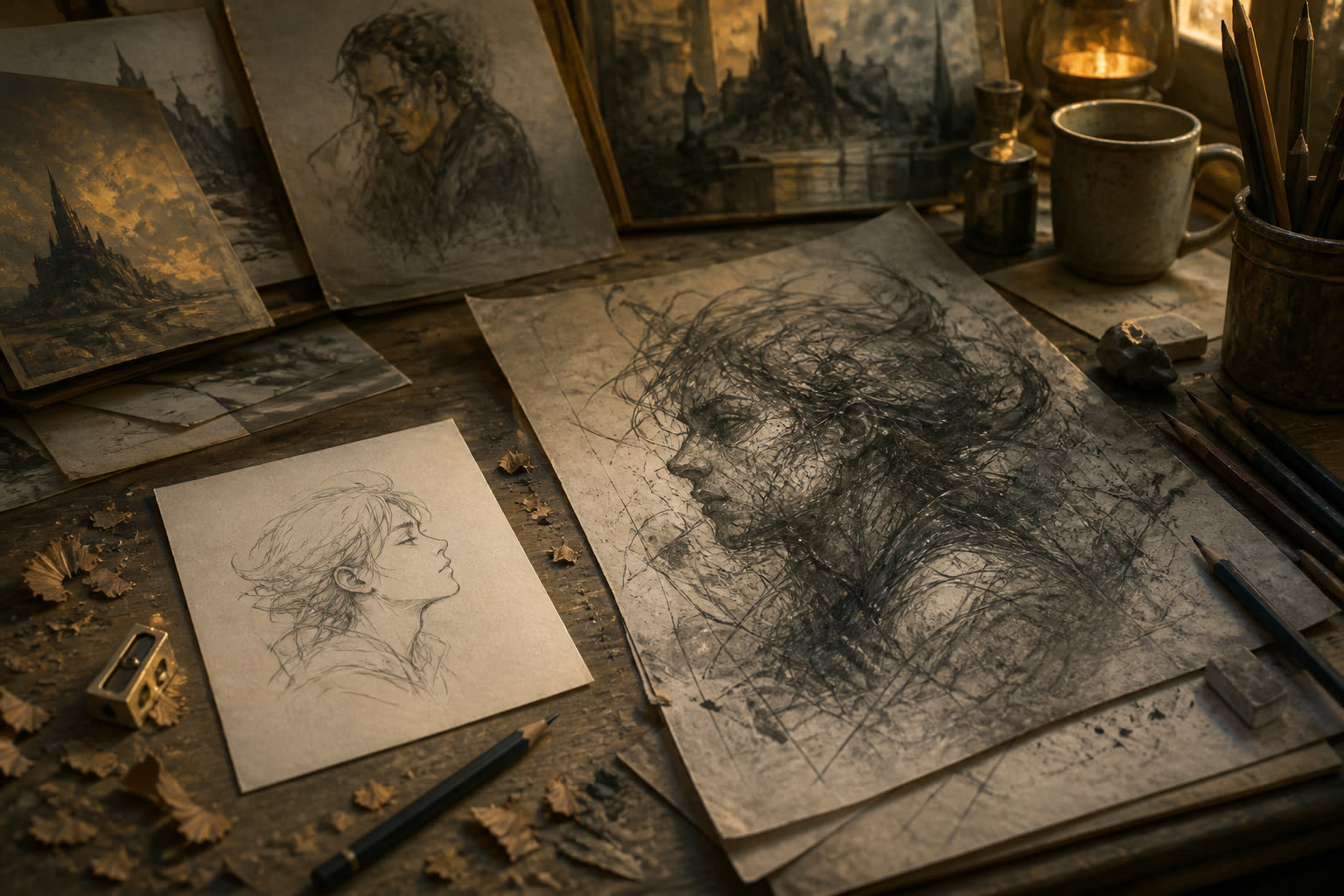
The #1 writing lesson I learned from pencil sketching characters

As a visual artist, I’m at a disadvantage. I have zero natural talent.

But that’s not stopping me from learning to draw. My ultimate goal is to be able to draw concept art of my characters. So I’ve been drawing heads (from every angle) for days. They are invariably bad, but they are improving.

So what does this have to do with writing?

The smaller the sketch, the less detail I can put in without it turning into a muddy mess.

This is true in writing. If you are introducing a walk-on character, you can’t spend four paragraphs describing him. If your character dives into a restroom to hide during a gunfight, you can’t break the pacing to give us paragraphs of description about toilet stalls.

But you don’t want to miss the opportunity of establishing these elements firmly in your reader’s mind.

A guy called Foster came in with the report. He handed it to her.

“This it?” she asked, leafing through it.

“Yeah. Not much there. A few burglaries, a noise complaint.”

She didn’t even notice when Foster left. It seemed impossible her suspect had left so few tracks in his record. Nobody went from robbing a double wide to killing fourteen people.

That’s fine, we don’t need any context to know what’s happening. But the reader is forced to fill in the details of the world with the Generic TV Cop Show setting. It works, many super successful writers do it, but that doesn’t mean we settle for generic.

A guy called Foster came in with the report. He scratched a fat earlobe and extended the file across her disaster area of a desk. He raised an eyebrow, scanning the debris of yesterday’s lunch. “Want me to call FEMA?”

She grunted a laugh. Her desk wasn’t that bad. “Want me to call your cardiologist?”

She flipped open the file. He muttered something about his cholesterol. “This is it?” she asked.

“Yeah,” Foster said. “A few burglaries, a noise complaint.”

It seemed impossible her suspect had left so few tracks in his record. Nobody went from robbing double-wides in Pine Place to killing fourteen people in a Stanel Heights mansion.

Yes, it’s a bit longer. We see that she has a messy desk. But we now see that Foster might be a bit unhealthy. We see they have a relationship based on teasing. The pace is just slightly slower.

If the description of Foster went on more than this, the reader would start to think Foster is a more important character than he is. Or they might wonder why our detective is losing focus on the task at hand to notice so many details about him.

Just as in a small sketch of a face, we can’t pack in every wrinkle, every freckle, or the smallest creases above the eye. Give us the shape and a detail or two that captures the essence.

The more sentences you use to describe something, the more important the reader assumes it to be, and the slower the pace becomes.

Accidental genius solves all plot problems

I am often impressed by my own accidental genius.

Wait. What?

Accidental genius is one of the great joys of writing fiction. And you have already encountered it.

When something I “just made up” during the flow of writing back in chapter 3 suddenly becomes pivotal to the story in chapter 15, I grin like a maniac and type like a fiend.

“It’s happening!” I cry. “It’s really happening!”

The best part about these things is that they appear to be oh so carefully plotted out. “Readers are going to think I’m brilliant!”

And a thousand writers will lie right to your face and say they thought and thought and thought and weighed detail after detail and assembled their novel like a Swiss watch. And yes, they did put that in on purpose and it relates to the theme of “urgency” as it applies to the human condition in the twenty-first century blah blah blah blah.

They did no such thing.

I love when my subconscious mind—the creative mind I mention in nearly every post—delivers its genius up to me like a gift. I still give myself credit, because if I didn’t sit down and write every day and remind myself to relax, it never would have happened.

In his book Creating Short Fiction science fiction grandmaster Damon Knight teaches that we must learn to “collaborate with Fred.” Fred is the name he gives to the creative mind. He instructs writers to give Fred a story problem at bedtime, sleep on it, and chances are you’ll see it in a new light.

We don’t have to “puzz and puzz until our puzzler gets sore” (Grinch reference!) We simply need to let the same genius who stuck in that chapter 3 detail to realize you’re waiting for him or her to tie a couple plot points up.

All the accidental genius needs from you is to keep writing.

“Write. Don’t think. Relax.” —Ray Bradbury

Delving too deep: when writing becomes dangerous

Your story comes out of a mind, a psychology, a world view.

It’s the same brain that worries, and loves, and envies. It’s the same mind that dreams when it sleeps. Or that gets hooked on a TV show or finishes a bag of chips without thinking about it.

Nothing exists in your story that doesn’t come up from the depths of that same mind.

Writing a novel is to excavate a portion of your inner self.

There are dangers to this work. People think writers—artists in general—are more susceptible to anxiety and depression because they work so much alone, or because creative work appeals to emotional people.

Maybe.

But maybe these mental health challenges are made worse because we are stirring up the silt of our subconscious EVERY SINGLE DAY.

In The Fellowship of the Ring by JRR Tolkien, Gandalf says: “The Dwarves tell no tale; but even as mithril was the foundation of their wealth, so also it was their destruction: they delved too greedily and too deep, and disturbed that from which they fled, Durin’s Bane.”

The Bane he’s talking about is the Balrog. And if you’ve read the book—or seen the movie—you know how fearsome that creature was.

And we writers risk awakening our own demons, because the act of writing stories is to delve deep. For some, writing itself is therapeutic. For others, it simply opens wounds. I’m not a mental health professional, so I can’t offer more counsel than this:

If your life isn’t working because of anxiety or depression or both, finishing a novel won’t fix it.

It’s time to get help. I have, and it’s made all the difference.

Because there have been times—months on end—when I simply couldn’t write. I didn’t dare.

I didn’t know what was happening to me. Why did my heart start to race, and my head spin with vertigo. Or why would some situations make me weak with nausea and make my cheeks go cold and pressure build and build in my chest?

Looking back, I don’t truly know how I climbed out of that state, but I did not do it alone.

If you need help, get help.

Google some names. Send some emails, make some calls.

Start.

Your character’s deepest, darkests thoughts

Your character has thoughts, share them.

How much woolgathering your POV character can do is dependent on your genre and your particular style. I like characters who think and reflect. In fact, it’s required if we are to write descriptions that are filtered through opinion.

So how do we deliver thoughts effectively?

This will depend on what perspective you’re writing in.

So here’s a quick rundown of the common choices.

First Person is written from the viewpoint of “I” as in: I didn’t know I would fall in love with a vampire, but when he bit me it was all over.

Third Person: She didn’t know she would fall in love with a vampire. But she did, it was all over.

In first person you can easily share the POV character’s thoughts, because the narrator IS the POV character.

I never liked cats. Or maybe it would be more accurate to say I never trusted them. When I was a kid we had them on the farm. They were distant animals, half feral. Dad never let us feed them, and frankly who would want to? They killed cute mice all day long.

That’s a direct line into a character’s thoughts.

In Third Person we have to come at it with some sleight of hand. Because in Third Person the narrator is NOT the character.

She never liked cats. Or maybe it would be more accurate to say she never trusted them. When she was a kid they were there on the farm, but they were distant, half feral. Her dad never let her feed them. Who would want to? After all, they killed mice all day long.

That example gives us some thoughts, but we get a sense that the narrator is telling us what her thoughts are. To get deeper, we have to peel off some of the narrator.

She never trusted cats. She knew their kind, sneaky, greedy little mouse killers that they were. A cat was a sort of demon, and folk who kept them in their houses were idiots. Dad agreed with her, and he wouldn’t let anyone feed them. The best thing she could say about cats was they kept the dogs busy.

Now that we’re getting into her opinions more directly, they come across as hers. There’s a tone to them that feels like she’s thinking them.

Dang. There was a cat ahead. Nasty calico with a notched ear. She circled to keep wide of it. You can’t trust cats. Sneaky little devils. They play with their kills. Merciless. She had no idea how people tolerated them in their homes. Growing up on the farm they were everywhere. Only purpose they served was to keep the dogs busy. She’d trained ol’ Barney to kill them every chance he got.

Now we are deeper into the third person POV. Did you notice how? The narrator is first reporting her direct experience of the moment. And then the declarative opinion: “You can’t trust cats.” This feels like her direct thought. We are in her head.

Going deeper into a POV or choosing to hover a bit higher is a choice. We can move up and down these levels as the scene requires. I’ll address that in more detail tomorrow.

For now, just try it out.

You don’t need to italicize thoughts most of the time. But in some genres it is standard and readers like it. Some editors hate italicized thoughts. I’ve never read a convincing explanation for or against it.

Dang. There was a cat ahead. Nasty calico with a notched ear. She circled to keep wide of it. Can’t trust cats. Sneaky little devils. They play with their kills. Merciless. She had no idea how people tolerated them in their homes. Growing up on the farm they were everywhere. Only purpose they served was to keep the dogs busy. She’d trained ol’ Barney to kill them every chance he got.

To me that has a different feel, a different pace. I “hear” the italicized thoughts as unvoiced dialogue. So make your choice based on how it sounds best to you.

If you are introducing a new POV character, starting way down deep in their thoughts really helps immerse readers. Thriller writers often do this when introducing crazy villains and serial killers. Sometimes they’ll be so deep the thoughts come across disconnected and jarring.

He huddled in the garbage bin, nose full of old cabbage and rotty smells. Earthy stink. Worm breath. Eye to the hole. The street was dark and quiet. This was where she passed each night. Twelve thirty. Screw driver, flat head pressed against his thigh. Pain blossomed just shy of blood. The gift, the gift giver, the giver of glorious gifts. The honed flat edge. Like a knife, a wedge, to pry up the skin like a locked lid. Stay still! She might hear him breathing. He let the gift giver slice his skin, just a little. He stopped himself. Save it. Save it. Save it. Save some for her.

Now we are mainlining this dude’s madness. We are witnessing stream of consciousness as thoughts arise. The reader understands he’s mad, and might even have slight sympathy for him even as they fear what he’s about to do.

We love them because they’re so bad (writing villains)

Everyone loves bad guys.

But how do we make sure our villain isn’t a mustache twirling sadist, who is bad only because he does bad things.

The more readers can understand the bad guy’s motives, the more layered the experience of the story.

If you remember one thing: the villain sees himself as the hero. The villain has reasons for what he or she does. Part of your main character’s journey is learning who her foe is and why she must face him down.

In Starside Saga, there have been several “big bads.” The Hargothe claimed to only seek Til’s glorification, though it was clear that he was power-mad. “All things are permitted in the service of Til.”

Dunne Yples went mad because he witnessed Kila burning up a village of people. He was sure she was a prophesied destroyer of the world and had to be killed at all costs.

Yiothizandra is a demayne of Night, trapped in Kila’s world against her will. She has contempt for humans, and wishes only to be free (she’s the real victim here, you see), even if it requires killing everyone alive.

As the saga continues Kila faces the Revulsion, the ultimate force of destruction. It is pure suffering and wishes to bring about the End of All Things, including itself.

Bad guys are powerful. That makes them worth fighting. But they also have understandable reasons, even if we think they are insane. In fact, the more compelling (dare I say convincing) we make the villain’s rationale, the more frightening he is.

The beauty is that every writer contains multitudes. We all have a shadow side where our bad guys dwell and plot mayhem. One of the great pleasures of writing fiction is unleashing that aspect of our nature on the page.

Your bad guys may be murderers, or mistresses, or even opposing ladies in a fundraising competition for the church. She can be the rich woman who outbids your hero on eBay for a family heirloom, or a guy who smashes mailboxes. It all depends on the scope of your story.

Escape the Muddy Middle of your Novel

Writing through the middle of your novel can be like trudging through a bog, every step an enormous effort, mud sucking your shoes and socks off as you go.

In the distance, fog. Behind you, fog. Above you, fog.

And then come the mosquitoes of doubt and self-loathing. They buzz around you, nibbling constantly, until you cry out: “Why am I doing this to myself?”

This is where I would normally quote Bradbury to you, and you would roll your eyes and tell me to just shut up about Write—Don’t think—Relax already. You’re sick of that and you want an answer to the problem of the day-to-day toil, of churning out words that you know just suck and that aren’t going anywhere.

I wrote 1788 words yesterday.

At no time did I believe the writing was good.

At no time was I confident that the descriptions (filtered through the opinions of my viewpoint character) were vivid and compelling.

At no point did I feel pulled along by page-turning momentum.

I’m not immune to the changing weather of mood and emotion.

But I have no intention of stopping, because I have the benefit of experience. Sixteen novels, over a million words published. I know this territory.

The first time you cross the swamp, you don’t know if it ever ends. But if you cross it once, you have that knowledge, that certainty forever. There is firm ground ahead.

Here’s what I’ve discovered:

  • Your writing is never as bad as you think it is. Scenes written while you feel enthusiastic aren’t necessarily better than the ones you write when you have a cold and want to fall asleep at the keyboard. I’m often delighted by chapters I had assumed were slow-paced masses of confusion when I wrote them.
  • You learn to distinguish between self-criticism of plot and instinctive alarm bells that something isn’t working. Pay attention to your gut, not so much your mind.
  • If you write yourself into a corner and don’t know how to get out, good! Your reader won’t know what’s going to happen either.
  • It’s okay to do a larger loopback and take a right where you previously took a left. Yes, you’ll have to get rid of a bunch of hard-earned words sometimes. That’s no problem. Your only concern is progress.

In any endeavor, discomfort is how you know you’re exercising. It’s what forced your brain to adapt. Recognize it and take satisfaction that you are doing something difficult.

Write a Page Turner with the BTTR Technique

Want to know how to write a page turner?

The kind that readers simply cannot put down?

There’s a technique to it. And it’s easy to learn.

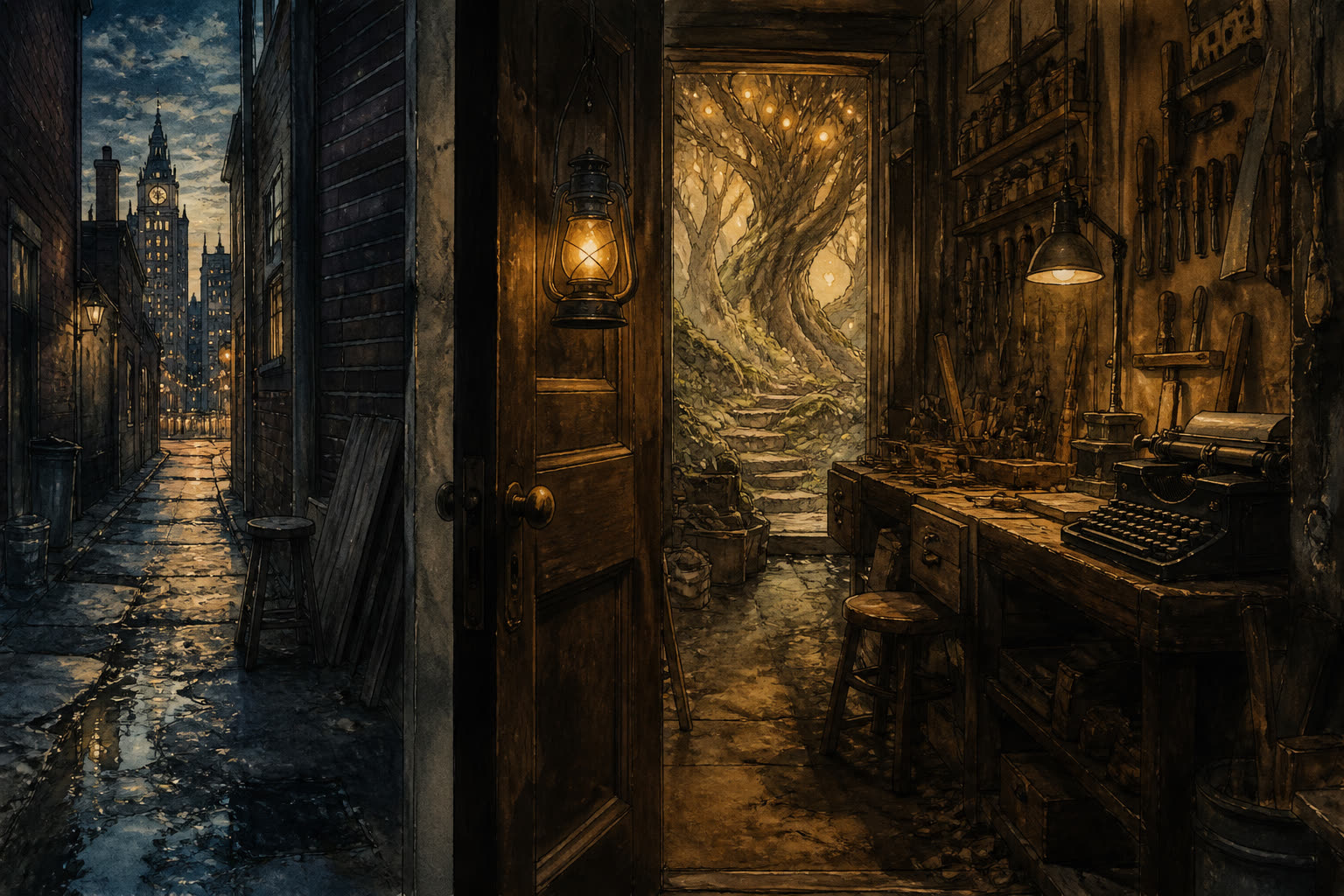
Oddly enough, I learned this technique at a little woodworkers shop in Milwaukee. The entry to it was just in the middle of an alley, in the side of a big old warehouse.

It was actually the back room of a slightly larger shop selling brewing supplies to hobbyists. The guy who leased the space was illegally renting out his back storeroom to the woodworker.

I had heard about this guy from a friend who collects typewriters. Apparently the woodworker had been a typewriter repairman way back in the day. But now he was in his 90s and was selling off some of his old tools. Typewriters have very specialized tools.

When I went in, the place smelled really off. And I don’t mean strange. It was the gaggy sweet smell of decay. I was sure the old man had died and I was going to find his body. If only.

What I found was much, much worse . . .

That’s the technique.

Bait : Spark interest in the reader’s mind with bait. (I want to learn this easy powerful technique Eric mentioned!) Usually a question.

Tease : Delay answering the question with details that seem to be leading somewhere, but you can’t quite figure out where. Show details that create more confusion (brewer hobbyists? typewriter repairman? woodworker? What does any of this have to do with the technique?)

Twist : Surprise with a little (or big) twist. Something unexpected. (bad smell? not a dead body but something worse?)

Release : Relieve the tension, but not all the way because you put out some more bait.

So how does this translate to scenes in your novel?

Like everything else I’ve discussed, it’s a skill you learn through practice. And once you’ve practiced it, your creative mind will happily use it. This constant bait, tease, twist, release cycle can happen even in very mundane scenarios.

Imagine using it in a scene where your main character is going to meet his girlfriend for dinner where she’s going to tell him whether or not she’ll marry him.

The reader wants the answer. Most will be hoping for a particular answer.

But he doesn’t just sit down and she says “yes!”

You want the waiter to interrupt before the conversation can even get started. You want your hero gauging his girlfriend’s answer from her demeanor, her eyes, her outfit. You make him listen to her talking and talking and still not answering. And he starts to realize that if she’s giving this long preamble, the answer can’t be good.

And then he starts resenting her and berating himself. Because why didn’t he see that her wanting to meet him at a restaurant was a bad sign in the first place? She just wanted to avoid dealing with him in private. She’s here to let him down where his natural politeness will prevent him from making a scene.

OMG this is a disaster.

To make things worse a mariachi trio comes up and starts playing “Bésame Mucho.” It’s agony.

What’s she doing now? She’s getting down on one knee. He’s appalled. She’s mocking him.

NO! She’s apologizing for making him wait, for saying that she needed to think about it. She’s apologizing for ruining his proposal by not leaping into his arms and shouting yes, yes, yes. She’s apologizing for ruining the special moment that they would one day tell their children about.

She’s proposing to him, right now, to make the proposal memory unique and unforgettable. Something they’ll tell their children about with laughter and tears.

“Will you marry me?” she asked, eyes welling with tears.

He pulled her into his arms. He whispered his answer so that nobody but her could hear. “Yes. My dear, sweet love, yes!”

The people seated nearby applauded, and the cheers rose and spread through the restaurant. But one woman, seated near to the kitchen did not clap, nor cheer, nor clink her wine glass with the back of her butter knife. . .

And so the cycle continues. You could write a book using only this technique, and it would work out pretty well.

So practice this idea. Take ten minutes and make up your version of the scene above and see where it leads. When your creative mind is engaged in this pattern,you will be dying to see what happens next.

You got me feeling emotions

It’s tempting to go straight at the emotion of a scene. To write what the character is feeling. Or to even have them say it in dialogue.

“I love you.”

That lets the reader know it. But it doesn’t make the reader feel it.

The picture above conveys tenderness, love, partnership, safety, comfort, ease. And we can sense it because we can see it.

No emotion words needed.

Here’s a snippet full of emotion that does not use any emotion labels:

Jen studied the table, finding it impossible to meet her mother’s weary eyes. The cafe door jingled as another patron went out. Jen’s neck flushed. Her sweater felt suddenly too tight, too hot. The heat rushed like a geyser to her cheeks. God! To be just a patron and not a daughter. That was freedom. Because then she’d be able to get up and walk out, jingle the bell one last time, and be away from this impossible table and its half-eaten scones and going-cold coffee.

We might need more context to understand all of the emotional currents in the little vignette above, but we don’t need much.

Even by itself it provokes a sense of several emotions. Jen is uncomfortable under her mother’s gaze. Whatever she’s feeling, it’s making her too hot, and that’s making her more uncomfortable. Is it embarrassment? Is it anger? Is it guilt? She sure has a wish for freedom, which suggests being trapped. The half-eaten meal and cold coffee suggests the meal was interrupted by a discussion that had cost one or both of them their appetites.

Real emotions are complex, and you can evoke them more powerfully by not naming them directly. Let your reader infer the emotion and suddenly they aren’t merely thinking: “oh, this character feels guilty, or she feels judged.” They are feeling it.

And that is powerful.

As you continue in your writing journey, you’ll come across scenes where complex—or chaotic—emotion is needed.

Sometimes the most powerful way to say “I love you” is something quite indirect:

“You had me at hello.”

Do you remember what movie that famous line is from?

That payoff is anything but generic, and that’s why it knocks our socks off.

Chain Anchors to your Characters

Help your readers remember who’s who by anchoring them.

Here’s the problem. I read some books very slowly. I might read chapter 2 on Monday and not get to chapter 20 for a couple weeks. So that side character with Very Important Information who the detective spoke to in chapter 2 will be forgotten by the time I get to his reappearance in chapter 20.

Characters that come and go like this are important, but can also be confusing. If you’ve ever been 2/3s through a book and had to stop and say, “who is this guy?” then you know what I mean.

Anchoring is an excellent way to remind readers who a character is. That is, give them a memorable quality or two that you refer to whenever they reappear.

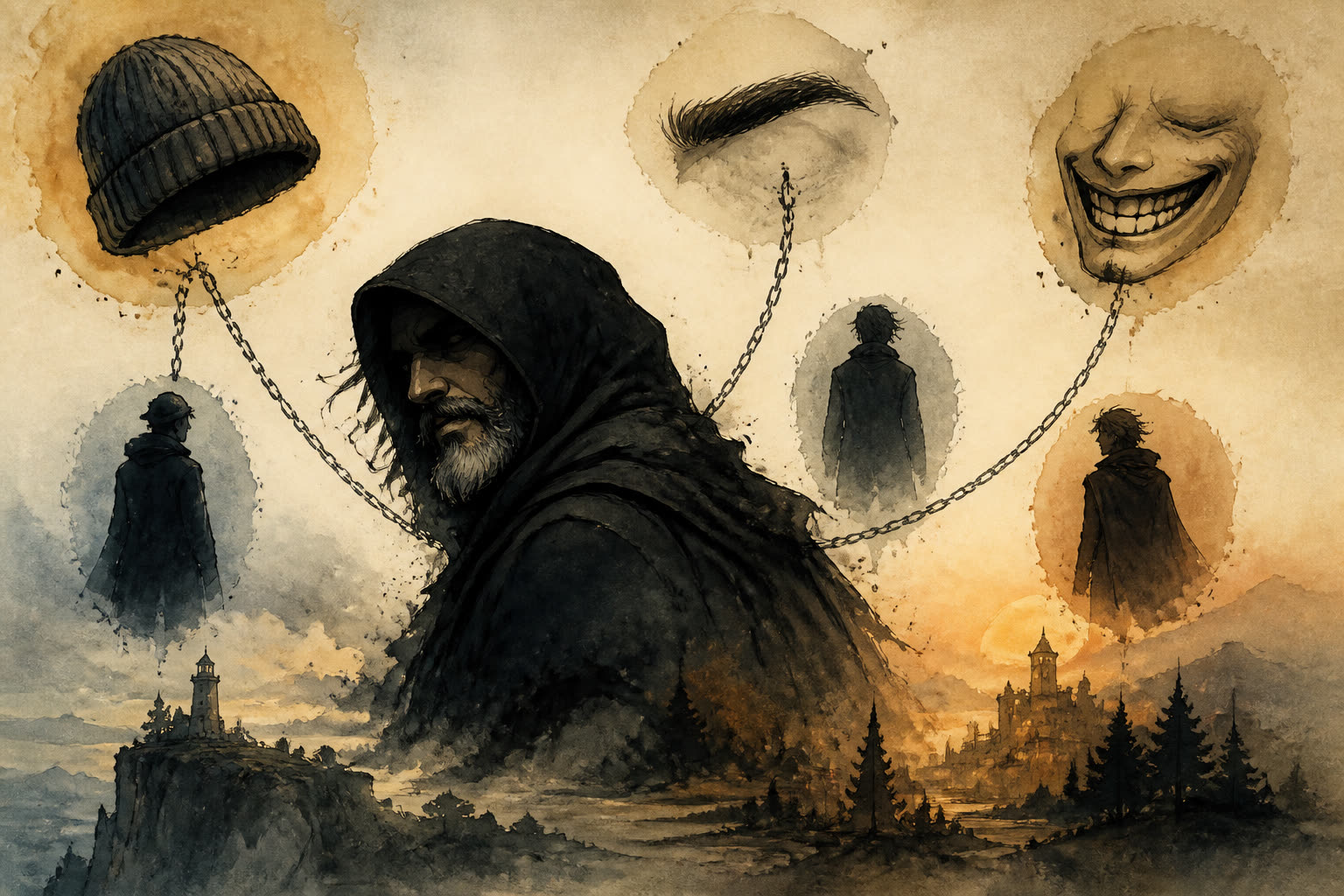
In Starside Saga I do this with all my side characters. Fallo has a single black caterpillar eyebrow and he’s ugly. In the early books Henley wears a knit cap, and has fiery hair. Marlow has a “salt and pepper” beard. The Cloak has a “wolfish grin” and a black cloak. Ragin Keel has white hair and pale complexion. Quinn is raven haired and is constantly reaching for her shadline dagger. Flaumishtak has hair that flows into tendrils of smoke. Nax has white chin and feet. Lop is portly and always wants food. Oly hisses at Kila pretty much every time he appears. Bazron’s scales are so black, he is an absence in the air. Klayne has a charming smile and looks like a king.

You get the idea.

For main characters like Fallo and Henley, these qualities aren’t as important in later books because readers are very familiar with them. But early on, they had to be tagged repeatedly to anchor who they were in readers’ minds.

Anchor with visuals: A scar, a tattoo, a unique quality to their posture or their hairstyle, a hat, a narrow nose, a birthmark, an absence of eyebrows, a mannerism.

Anchor with sound: a penchant for cursing under his breath, a wheezy voice, a nasally voice, the whistle of breathing through his nose, a habitual cough, difficulty breathing, a tone of certainty, uptalk, someone who speaks so softly you can’t hear them.

Anchor with smell: soapy and herbal, distinct perfume, sweat and livestock.

Anchor with taste or touch: harder to do with characters, but I would never say impossible. A man could have leathery skin (which is a texture visual that serves two senses at once) or hair as soft and light as eider down. Referring to the taste of lipstick after a kiss or even taste-related smells. “His garlicy whispers made Jack recoil and cover his nose.” Or “Mindy leaned over him at the cafeteria table, interrupting his conversation with Autumn. She snapped her wintergreen gum and whispered too loudly: ‘You asking her out?’”

That wintergreen detail would be all you needed to remind readers’ who she in ten chapters later.

To give dimension to your more important characters, give readers more than descriptive details or behaviors. You introduce them with anchors that you repeat, then begin to add new ones. But most importantly, give them a unique voice in dialogue.

A character that always makes an inappropriate joke.

A character who responds in one or two words.

A character who always speaks in compound sentences.

A character who uses euphemisms to be overly polite.

A character who expresses intolerant attitudes and leaps to violent conclusions.

A character who insults everyone.

A character who says things that rhyme.

A character who expresses weariness.

A character who uses slang, or dialect.

A character who uses clichés.

This is what makes writing fun.

So, anchors aweigh!

Hating or Loving Your Writing is a Choice

George Orwell struggled with his writing.

In a letter to a friend he wrote, “I am so miserable, struggling in the entrails of that dreadful book and never getting any further, and loathing the sight of what I have done. Never start writing novels, if you wish to preserve your happiness.”

His letters are filled with this sort of stuff.

It’s almost like he was performing self-criticism for his friends and colleagues to shield him from external criticisms. I see this all the time with new writers.

The Orwell state of mind is not an advantage if one wants to be happy and (dare I say it) enjoy writing. It’s certainly not helpful if you want to stay motivated to write.

Orwell is trying to be a writer, editor, and critic all at the same time. He was qualified in all three of these domains. And that was his biggest problem.

If you write with an editor on one shoulder and a critic on the other, writing will be miserable indeed. Orwell was miserable all his life.

Ray Bradbury, by contrast, just wrote. He wrote Fahrenheit 451 in the basement of UCLA on coin-operated typewriters. A dime would give him 30 minutes of writing time, and he didn’t have money to spare. He spent $9.80 writing that book. Money was slipping away every second. He couldn’t sit there and agonize over things or rewrite the same scene over and over. He got on with it.

So here’s my takeaway: You will gain nothing by hating your writing. It will not improve your book, and it certainly won’t make writing easier. You will not protect yourself from criticism by criticising yourself first.

Hating or loving your writing is a choice.

It’s obviously wiser to love it, considering how much time you’ll spend doing it.

So brush the editor and critic off your shoulders and immerse yourself in your world. Go on the adventure and delight in it.

“Don’t think. Thinking is the enemy of creativity. It’s self-conscious, and anything self-conscious is lousy. You can’t try to do things. You simply must do things.” —Ray Bradbury

Pomodoro Technique for Writers

I got off to a rocky start yesterday, but I did hit my daily wordcount goal of 1800 words.

That’s because I know a technique that really helps build momentum in any situation. You may have heard of it:

Pomodoro Technique

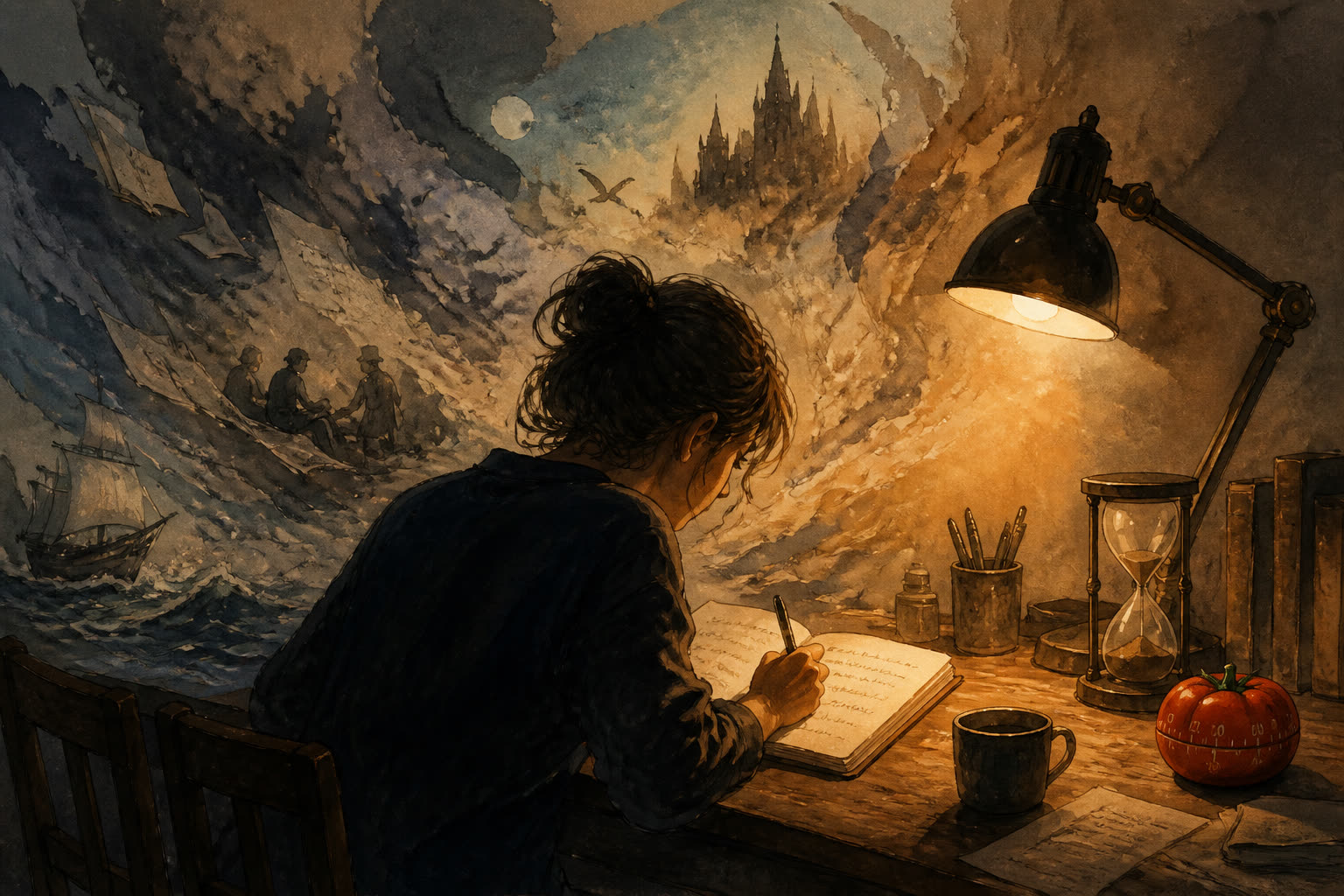
Invented in the 1980s by a university student called Francesco Cirillo who was overwhelmed with his studies, the Pomodoro Technique is super simple.

  1. Set a timer for 25 minutes (I do 20)
  2. Write until the timer bell rings
  3. Take a five minute break
  4. Repeat.

This is how I write my first drafts. Twenty minute writing sprints. And yes I do stop mid-sentence when the timer goes off. In fact, I love to stop mid-sentence. Makes starting the next sprint even easier because there’s a thought already in progress.

I add one more step: After each sprint of writing, I record the wordcount for the session. I’m currently using a spreadsheet for this, but I’ve filled up little notebooks with hand-written tallies as well.

Why does the Pomodoro Technique work?

It gives my brain assurance that it doesn’t have to stay in creative mode indefinitely. Creative work can sometimes be very exhausting. Especially if I’m thinking too much.

When the timer is counting down, there’s a very light pressure to make the sprint count. I just have to write something or my wordcount will be super low. It may sound silly, but it works. And the less thinking you allow, the better. I’ll talk about that more tomorrow, because for some that statement will be confusing.

Doing Pomodoros tells you what your pace is. This helps budget how much time is needed to hit the daily goal. Over the past few weeks I’m averaging 640 words per 20 minute session. That means I need to do about three of them to hit my 1800 word goal.

Some days that average is much less, especially at the start of a new project.

So give it a try.

It will teach you to write forward. It will keep you from wasting time trying to perfect each paragraph before you move to the next. You don’t need to perfect each scene before you write the next. You need to write the next scene and the next.

Get momentum going.

Writing is mindset. The timer is a constraint that will focus you on getting the words down. Sometimes you need to blow out some gunk before the good stuff comes. Twenty minutes on, five minutes rest. Twenty minutes on, five minutes rest.

Don’t write nonsense. This isn’t freewriting or free association. If you need to pause for a few seconds that’s fine. But if it’s much longer than that, just write the next sentence. Doesn’t matter if you don’t know where it’s going. Doesn’t matter if you like it. Just stop thinking so much and write what happens next.

Trust your subconscious. It knows story.

She Shrieked: Tagging Dialogue

One of the fake writer landmines is the so-called “he saidism.”

Some editors and style experts will tell you to never use any dialog tag other than “he said” or “she asked.” They might allow an occasional “she whispered” or “he shouted.”

This landmine is easily avoided because 1) it’s not difficult to understand and respect, or 2) you can stomp on it and discover that almost no reader cares. Many huge selling writers put all sorts of dialog tags in their fiction. “He shrieked” “he groaned” “she sighed” “she warbled.”

I tend to stay with “said” and “asked” because I want my readers to skim right past the tag. The purpose of the tag is to make clear who is speaking. If I want to convey a sigh, groan, or shriek, I would be more likely to show it through what actors call a “beat.”

An actor’s beat is a facial expression, a posture change, a turn of the head or eyes, or handling a prop of some sort. These beats reveal to the movie audience what’s going on in a character’s mind.

Novelists can reveal the point of view character’s thoughts by simply having them ruminate on them.

“I don’t think we can stay together,” he said.

So this was it. The moment I had feared. The moment I had connived and lied and schemed to avoid. If he knew how much effort I had put into deceiving him, he wouldn’t just say that so blandly. Did he think I was one of his employees, to be dismissed and replaced without a second thought? Unless . . . “Who is she?”

In that example, we are in first person and the narrator reports her thoughts to us. I don’t need to put on a “I said” tag at the end because we know it’s her talking.

But what about other characters? We can’t write their interior monologue if they aren’t the current POV character.

The answer is to have them perform a beat to convey a bit of their emotion AND signal who’s speaking.

I met him exactly on time. I knew something was wrong because he wasn’t at our table in the back corner. Instead he was at a two-top by the window. It wasn’t as private. As soon as he saw me coming he grimaced and put on his sad eyebrows. Totally fake. I sat and looked at him and waited.

He spun his coffee cup between his palms, little quarter turns. Precise, the way he adjusted the vent fan in the car. “I don’t think we can stay together.”

“Who is she?” I just blurted it out. But how dare he dismiss me like one of his lazy employees? If he knew just how hard I had worked (etc, etc)

Here’s another beat.

He bit his lip and looked out the window. “I don’t think we can stay together.”

Just keep the dialogue in the same paragraph with the beat.

So if you find yourself getting antsy because you’re repeating “she said” tags a lot, replace them with beats. They are marvelous for stretching out tension, indicating pauses, or re-introducing walk-on characters to refresh readers’ memories.

Use this technique today on purpose. That will require a little thinking, but not too much. Then move on and let it settle into the back of your mind.

When you add a tool to your skillset, your inner storyteller will start using it.

The Power of the Loopback

I hit my wordcount goal yesterday (Nov. 6th, 2020), but it took longer than usual.

Why? Because I did a loopback!

I’m a huge advocate of writing forward, and keeping momentum going. But sometimes you don’t remember what you wrote two days ago. It’s okay to loop back, read through it, fix little errors, and add in details as long as you stay in the mindset of discovery and avoid the overthinking that comes with invention.

This is not the time to be “polishing” or rewriting. Many writers get trapped in a loop of continuous polishing of early chapters and then grind to a halt because momentum is lost. (You know who you are.)

The purpose of a loopback is to refresh your memory, regain momentum, and pick up where you left off with your creative mind fully engaged in discovery.

When I start writing this morning, I will only loop back a few paragraphs. In a day or two, I’ll probably loop back a few thousand words.

Write forward, loop back a little bit, get a running start, write new scenes, loop back a little bit, get a running start, write new scenes.

“Write. Don’t think. Relax.” —Ray Bradbury

What About Story Structure?

Does it feel natural to you to outline your novel?

Go ahead!

I know many authors who do that. And they are very deliberate about the three act structure. They puzzle over what inciting incident will kick off the action. They scribble down their M.I.C.E quotient, or plot out the 40 beats of the Save the Cat formula. They’ll make sure they’ve plotted a false victory, a dark night of the soul, and a Hero Returns Home.

These concepts are learned through study. They help us reverse-engineer successful stories to see why they work. As we move forward in our writing careers, such learning is essential. And it requires thinking, which I’ve discouraged in every email so far.

To deepen your craft, thinking is necessary.

To learn these models, we have to apply them intentionally. We have to push through the frustration and confusion caused by molding our creative output into unfamiliar shapes.

If I gave you the assignment to write a page without ever using the word “was,” you might have to think about it. You’d have to rephrase sentences that otherwise flowed up from your subconscious. That’s a writing exercise that will train your creative mind to reach for more vivid verbs when they are appropriate.

If I asked you to outline a novel that perfectly matched The Hero’s Journey, you’d have to think about it and puzzle over it.

These are valuable exercises.

But if this is your first NaNoWriMo project, focus on training your mind to just write when you sit down to write. Embrace the Bradbury mantra I’ve been repeating in these emails “Write. Don’t think. Relax.” Trust your subconscious; it knows story. This is the fundamental skill.

If you get stuck, loop back, gain momentum, and write forward. Hit your wordcount. You don’t need to know anything more than you already know to write your novel.

When NaNo is over, study plot, character, or prose style. Do writing exercises to teach the creative mind these skills. Then get back to writing without thinking. Your creative mind will use your new abilities automatically.

Writing Out of Order

You don’t have to write your novel in sequence.

I know of at least one writer who doesn’t know what order scenes will be in when she first writes them. Once she has a bunch of chapters, she sits on the floor and arranges them. Then she writes transitions to make them fit together.

If this sounds crazy, don’t do it.

But if you get exciting ideas about a fight, or a meet cute, or a cat-and-mouse sequence, go ahead and write it and figure out where it goes later.

I move chapters back and forth in the chronology of my novels all the time. And because I know this will happen, I often jump ahead in the story to write what I think will be a pivotal scene.

This gives me something to write toward. And that builds momentum.

If your creative mind throws up a brilliant scene (or fragment of a scene), write it. Your creative mind will then happily fill in the gaps.

How do you pronounce that? (Naming Characters)

One thing that satisfies my power madness is naming characters.

I love naming characters, but here’s a secret: I don’t think about it for very long. I have never agonized over what to name a character.

I don’t know if this even counts as a tip, but when I need to name a character I just start typing consonants and vowels and see what comes out. If it’s too close to another name I’ve already used, I change a couple letters.

Here are some actual tips:

Try to make names pronounceable. Now, I know I’ve been accused of coming up with unpronounceable names. Ahem, Yples. Or Flaumishtak. In my first novel I had a character called Boffoygeedanama. (In my defence, he was a bigfoot. And he went by a much easier to pronounce nickname: Grizz.)

Avoid having characters with similar names. For instance, Sauron and Saruman might be confusing for some readers.

Don’t worry too much. Changing a name is easy with find and replace. I once named a character Beyonce. That did not make it to the final book.

Here’s where a few names in my books came from:

Harvin : a character in my first series (Bigfoot Galaxy). I needed a name. I happened to have a Green Bay Packers game on. I looked up and their adversaries for the day (Minnesota Vikings) had a talented wide receiver called Harvin. I saw it on the back of his jersey. I took it. I moved on.

Writing an early version of Thief of Sparks I had to name a ginger-haired young thief. I was listening to The Eagles at the time. I grabbed the name Henley from their drummer, Don Henley.

The monarch of Starside’s first name is Ell , which I stole from my daughter Ella.

When I named Dunne Yples (who later in the series becomes Kila’s main foe), my mind drifted over Ypres, the Belgian town figuring in WWI battles. Why? Who knows. I went with it, and the resonances (which are meaningful to me and invisible to my readers) ring in my subconscious mind as I write his story.

The donkey Tolky was originally named Tolkin, but I thought that was a bit too on the nose. So I shortened it.

The Hargothe was a phrase I typed purely in the stream of creative flow. I later read an old science fiction novel by Leigh Brackett that had a character called Hargoth! I couldn’t believe my eyes.

Terms like dragnithan, qiznithan, yoznithan, or felnithel. All of that comes from stream of creative flow. Same thing with the term “shadline” which first appeared in an unfinished proto-story that I wrote years before starting Starside Saga.


Let me know:

  • What is your main character’s name?
  • Do you have a side character whose name you love?
  • Did you have a specific inspiration or did you just think these names up in the moment?

Holy Plotholes, Batman!

fix plotholes with reasons

You’ve been merrily writing along, building your story day by day, and yet something about it nags at you. Some doubt.

Did you overlook a plot hole?

This fear is reasonable. After all, even if you’ve carefully outlined your book, it’s entirely possible that you’ve missed something.

Writers do get too close to their novels, such that they cannot easily see the larger picture.

My answer to this worry is simple:

Yes. There are plot holes in your novel.

There. Now you don’t have to worry about whether or not they are there.

When you go through your revision process, you’ll uncover a couple. Then you’ll fix them. Sometimes this requires major reconstruction, other times little patches. It’s part of the process.

The most troublesome plot hole is when your readers notice an alternate, lower resistance path your hero could have taken. A path that would have avoided all the drama and conflict.

Remember our discussion about what to do when you get stuck at the 1/3 point in your novel? Have your POV character make a tough decision.

Writers sometimes leave holes in the plot when they are too tentative in forcing a hard choice on the main character. Choices that, when taken, cut off all other options.

Sometimes all you need is this:

Freedom was through that door. She could charge through and escape. The killer would never find her, never root her out of the alleyways and lanes she knew so well. This whole ordeal would be over. Except for the lifelong hangover of self-loathing she would suffer, for being a coward, for being weak. She wiped the blood from her lip with one hand and gripped the crowbar with the other. And then she crept deeper into the warehouse, more afraid than she’d ever been. But the only true freedom lay ahead, in there, beyond the shadows.

In this case above, I’ve filled a potential plot hole (“why didn’t she just run away”) by making her decision to go into danger very clear. She knows safety lies in the other way, but she’s given a reason for going forward.

Here’s another. “Why didn’t the hero use his sword to cut the rope bridge behind him? Then the ogre-skeleton could never have crossed. The whole fight that followed could have been avoided.”

Kerek staggered off the rope bridge just as the ogre-skeleton was lumbering onto it. Kerek unlimbered his sword. There were four ropes, two for handholds, and two massive ones supporting the wood planks. He raised his sword. Then lowered it. If the ogre fell, it would not be destroyed. And Kerek knew what lay at the end of the gorge below. The village. To cut the rope would subject everyone who lived there to the skeleton’s wrath.

OR

Kerek drew his sword. There were four ropes, two for handholds, and two massive ones supporting the wood planks. He quickly severed the top lines. The bridge twisted under the ogre’s weight. It fell and clung to the gyrating bridge. But the support ropes were secured to tie-offs well below the ledge. Kerek couldn’t reach them. The ogre skeleton was clambering toward him like a weresloth, hanging from beneath the bridge. And it was coming fast. He ran.

Very often all you need is a sentence or two to let the reader know your POV character had a reason for their decision. It doesn’t have to be a good reason, or even particularly rational. As long as it is in keeping with who they are, the reader accepts it and goes along for the ride.

Whenever you discover a plot hole, look for a spot where you can have a character think about the alternative path and dismiss it for a reason. Better yet, have them try it and fail.

Another common problem is the continuity error. Readers sometimes call these “plot holes” when they are simply mistakes. If your main character has blue eyes in one scene, and then later has green ones, that’s a continuity error. You’ll catch most of these during revisions.

Or maybe you’ve put the same character in two places at once. I’ve done that! That takes a bit more creativity to fix, but in every case remind yourself of this: You are creative. You can fix it.

Screeching to a Halt? Hit the Gas!

A writer’s momentum often slows right at the 1/3 point of their novel. Here’s what to do if that happens to you.

I’m writing this on November 10th, which marks the 1/3 point of NaNoWriMo.

If you’ve been writing 1667 words/day, that means your manuscript is 16,667 words long now. And that marks the 1/3 point of a 50k word novel.

And that is exactly where many writers experience their story slowing down, or even grinding to a halt.

In the first 3rd of a novel, your main character is reacting to external events. This is where the detective is reacting to the murder and collecting info; this is where the lass becomes smitten with the laird, the shepherd is chased from his village by pillaging orcs. This is where the main character is on the back foot.

If you find your writing bogging down, it’s time to reignite your creative mind and get those sentences coming again.

Your main character needs to make a decision and do something proactive.

That’s all you need to know. Don’t overthink it.

Your creative mind sometimes resists big decisions. Why? Because big choices cut off options. They force your character past a point of no return.

This is why your confusion and frustration with your novel is so often a direct reflection of your main character’s confusion and frustration with her situation.

When she doesn’t know what to do, or when everything she’s tried has failed, her motivation flags too.

For you as a writer, just as it is for your main character, this is a turning point. Marshal your will, call upon allies, urge your subconscious to look at the problem from a new angle, dig deeper. Your hero’s journey is your journey.

And this is why I keep repeating the Bradbury mantra. “Write. Don’t think. Relax.”

Write the next sentence, and the next. The resistance you feel is your character’s resistance. Your job is to keep pushing her toward the brink where she must make a choice.

She will, and the writing will race ahead.

Be Very Judgy of Others

When introducing characters, let your POV character’s opinion show

One of my first emails this month was about a powerful technique for writing descriptions. At the time I was focussed on establishing your setting.

Remember the “establishing shot” idea back on day one of this series? And remember how I said to filter setting through the opinions of your point of view character?

We can extend this idea to introducing anything in a story, including other characters.

Example of standard character description:

Ashley wore a tight fitting blue dress that fell to mid-thigh. Her hair was freshly done for a night out, wavy and full of highlights. A smoky eye and dark lip finished the look. Her clutch matched her sparkly heels. I caught a whiff of perfume as she came through the door, something at once floral and sensual.

Example of character description as opinions:

Ashley showed up at my place in one of her clubbing dresses. Satiny blue, and draping from her elegant shoulders. It clung to her curves, falling to mid thigh. It hinted at what it hid, and she wore it like liquid lingerie. Her presence overwhelmed me, tall in her sparkly heels, dark of eye with overpainted lips, all pouty. Everything about her suggested staying in rather than going out. The air that followed her through the door was scented with rain, but her floral perfume hinted at moonshadowed blossoms. She was in bloom—an intoxicating, elegant violet—rare, and wanting to be plucked.

Ahem. Whew. I don’t usually write descriptions like that. Excuse me. I need a drink of water, or something.

So you see how the point of view character (in this case the first person “I”) can reveal so much more when we allow their opinions to filter descriptions.

Same Ashley, different POV character:

Ashley showed up at my place in one of her scandalous “going out” dresses. I wouldn’t even call it a dress! I wore more to bed on my wedding night than that little blue wrap. And the way she’d painted her face, with those raccoon mask eyes and bruised lips. She could tell I was disappointed in her. I know she could because she tried to loom over me in her cheap heels, as if to dare me (her mother!) to say something. Anything. I kept my mouth shut and tried not to sneeze on her overpowering perfume. I complimented her purse. Inwardly I prayed for her. But there’s only so much a mother’s prayers can do for such a girl. You will notice that descriptions filtered through your point of view character’s opinion reveal as much—or more—about the POV character as it does the character they are seeing.

Isn’t that beautiful? The reader loves this, because they get to sit way down deep in your POV character’s world, which makes it more real and much more fun.

Compelling Descriptions are Full of Opinions

One of the biggest challenges of writing a novel is dealing with descriptions.

Most people get bored reading long descriptions of rooms, or castles, or women’s ball gowns. Most writers are bored writing such descriptions.

This is why many modern writers skip over descriptions entirely. But this can result in a bland world, or a sense that the action is happening in a white room with no furniture.

Our job as writers is to “invoke” the world. So here is my guidance:

When the events of your novel move to any new setting, whether it’s a bedroom, a concert hall, or a battlefield, use the idea of an establishing shot.

This is from film and TV. It’s that wide shot that shows the apartment building on Friends, or the wide panning shot of the Shire in LoTR, taking in the green grass, the little road, and the hills with doors in them.

Simply start your scene with an establishing shot.

So how many words does it take? It can be a sentence, a paragraph, or a page, depending on how you handle it.

And this gets to my second tip:

When you’re writing, get yourself mentally in your character’s point of view. For descriptions of all types, tell the reader what the character notices about the environment. Tell us what the character’s opinion is.

And this is key: setting is opinion.

Example of standard description:

Grandma’s bedroom was square, ten by ten, with a window overlooking a back yard. Jen saw a tree back there, an oak. The walls were red and the bedspread was a garish, neon floral. Grandma had been colorblind, and her stitching had been uneven, and that was before her stroke. The closet door was one of those sliding, folding things, but it was off its track and now hung open on one side. Jen saw clothes on the floor inside. And it stank as if a cat had died in there. Jen left.

Example of setting as opinion.

Jen felt claustrophobic the second she went into the boxy little bedroom. A sinister oak crowded too close to the window, blocking out what little light oozed through the autumn clouds. The crimson walls clashed with the weird floral bedspread. Tulips and daffodils, but stitched in garish neon green and orange. She knew grandma was color-blind, but she could not help but see madness in the embroidered flowers. Her eyes went to the closet, where the folding door hung askew on one side, as if it too had suffered a stroke. Inside, on the floor, lay a wadded nest of old clothes. And from that shadowed maw came the stench of cat pee and decay. Covering her mouth, Jen retreated.

Notice how the second description is longer yet much more compelling. This is because it reveals character through Jen’s opinions. It also reveals more about her grandma. The combined effect is to invoke setting more completely. There is mood and tone and atmosphere. But the primary technique is reporting setting through the opinion of the point of view character.

Practice this skill and you’ll soon discover that establishing your setting helps you understand your character better and helps generate plot ideas.

“Write. Don’t think. Relax.” —Ray Bradbury

Stomping on Landmines

Don’t let fear of grammar errors or style “don’ts” stop you.

The landmine problem kept me from writing for decades.

Yes. Decades.

I didn’t write because I was worried about landmines.

Grammar, prose style, adverbs, tropes, clichés, passive verbs, and on and on.

I didn’t want to embarrass myself. I didn’t want to write a whole novel just to have some editor laugh at me, or worse, dismiss my work entirely.

I gained this fear by reading about all the mistakes beginning writers make. It was so overwhelming, I simply gave up before starting.

But here’s the truth: fiction does not require us to obey the textbook. Artistic license allows us to punctuate according to our own style.

Grammar is a convention. And following those conventions is good, because it helps the reader understand. But read any popular thriller. They are filled with fragmentary sentences. That is a stylistic choice to create a specific effect.

Let the words flow how they will. Allow them to cast their spell, to manifest your story in your own mind. If you’re not confident with commas, don’t worry too much about them. An editor will suggest changes later to make sure you’re achieving your goal.

Write by ear. Cormac McCarthy rarely uses commas at all, and he doesn’t even put quote marks around dialogue. I don’t recommend that, but it’s a valid choice.

Your prose style will develop over time. And you will learn the fundamentals of grammar by having your manuscript edited by a copyeditor.

Never stop writing just to look up a grammar rule.

Why do I say this?

The most important thing is the story, not the manuscript.

You are going to revise your manuscript later. You will take care of punctuation; you will trim the excess and add in details as you shape your story. You can study grammar rules at a different time.

As I said yesterday, writing should be discovery. When you begin tinkering with the manuscript you switch over to inventing. That sort of thinking sees errors and mistakes where there aren’t any. Pretty soon you’ve broken a story that was working just fine.

The first thing writers break is their own unique voice. They apply The Elements of Style like an Instagram filter and suddenly their writing begins to sound “professional.” That’s not good. Because “professional” means boring.

So go onward bravely. The landmines are not real.

See you tomorrow!

—Eric Kent Edstrom

Pen Addict: Affordable picks to get you hooked

I’m not even ashamed of it. I love pens and pencils and empty journals and planners and pretty much anything that involves putting words onto paper. (Typewriters? Oh, yes indeed!)

If you get the pen bug, you might start getting pulled into ever more expensive and exotic choices. But if you simply want a really good inking experience, here are my recommendations.

The Pilot G2 Shown here in a variety pack of colors. My favorite version of this one is the black ink. These provide a silky smooth writing experience, with good coverage and no skips.

I tell you a secret: I hate the red one. Not because there’s anything wrong with the way it performs. I just hate red ink. It means I made a mistake or I wrote a typo or a grammatical error. Or that I did any math assignment ever. 😛

The G2 also comes as refills that can go into many other pen bodies.

PILOT G2 Premium Refillable & Retractable Rolling Ball Gel Pens, Fine Point, Assorted Color Inks, 8-Pack Pouch (31128)

Rotring 600 is my choice for a pen on the go.

The metal body and knurled grip makes it the perfect field pen. It won’t slip out of your hand. It’s also fairly small in the pocket. The cartridge it comes with is good, but when used up, replace it with any standard Parker refill (like the Pilot G2!)

Lamy Safari Fountain Pen: This is always my recommendation for fountain pen newbies. They are affordable and the cartridges have decent ink in them. Once you get used to a good fountain pen, watch out. It can lead to a deranged obsession. I had to put a moratorium on new fountain pens several years ago because it was getting out of control.

These come in several colors if you don’t like charcoal. Like red, white, and blue.

If you don’t know what size nib to try, I recommend choosing a medium at first. If you like your pens to be very fine, then go ahead and try the fine. I can’t write with larger nibs because my handwriting is fairly cramped and my letters all blob together.

Fountain pen ink is another huge adventure. There are so many colors and sheens. If you want to dive off the deep end, go to Goulet Pen Company’s website and try their “ink drops.” They send little sample vials of different colors to try out before you invest in a whole bottle.

Skilcraft Ballpoint Pens are the official pens of the US Government and manufactured in the US by National Industries for the Blind.

Check out this infographic from their website. I have a box of these and they feel fairly cheap in the hand but they do perform way better than the Fisher Space Pen, in my opinion (although I have a couple of those as well because they are “dope” too.)

More Favorite Fantasies from my readers . . .

My post Top 5 Fantasy Books my readers say got them started sure stirred up some controversy.

So here are more books that my readers insist deserve consideration:

Memory, Sorrow and Thorn Trilogy by Tad Williams: (which is 4 books because the last one was so enormously long they had to split it in two). Start with The Dragon Bone Chair.

I read this series a very, very long time ago. But I remember being absolutely enthralled. So if you love epic fantasy (and I mean epic), this series is a must.

The Dragonbone Chair: Book One of Memory, Sorrow, and Thorn by [Tad Williams]

Tigana by Guy Gavriel Kay: I read this back in college, I think. Maybe earlier than that. Kay is a writer’s writer. A number of emails came in reminding me of this one.

Tigana: Anniversary Edition by [Guy Gavriel Kay]

The Mists of Avalon by Marion Zimmer Bradley: I got my copy through the science fiction and fantasy book club (remember when you could get 10 hardcovers for a buck when you signed up). I didn’t really want to read it, but then I did. Holy cow! The Arthurian legend told from the point of view of the women; and what a powerhouse classic it was. I loaned this book to a girl I knew. Today she is my wife of 23 years.

The Mists of Avalon: A Novel by [Marion Zimmer Bradley]

The Deed of Paksenarrion by Elizabeth Moon: I read this just a year or so ago and I LOVED it! Paks is a sheepherder’s daughter who feels a calling to be something more. Namely a warrior. What I love about this series was Paks’s innate nobility. A hero of honor who it is so easy to root for. The link takes you to an omnibus edition of books 1-3 and it is a steal.

The Deed of Paksenarrion (Paksenarrion Series combo volumes Book 1) by [Elizabeth Moon]

Chronicles of Amber by Roger Zelazny: this is a long series of relatively short books. People who love Amber LOOOVVE Amber a lot. I think I read only the first couple books in the series, but now I’m adding the whole lot to my list after so many people recommended them.

Nine Princes in Amber: Book One (The Chronicles of Amber 1) by [Roger Zelazny]

The Sword of Truth series by Terry Goodkind: You have spoken. I have recorded it here. According to my newsletter subscribers any list of important fantasy novels that doesn’t include The Sword of Truth series is useless.

Terry died this past week, so maybe it’s time to check out this enormously expansive classic of the genre. Here’s the first in the series.

Wizard’s First Rule by [Terry Goodkind]

The Riftwar Saga by Raymond E. Feist: This is another one of those series I read when I was 14 or 15 and never went back to. Now I’m afraid to re-read it because I loved it so much. I only got a few emails about this series, but I’m including it because those who mentioned it tended to put it near their all-time favorites list.

Magician: Apprentice (Riftwar Cycle: The Riftwar Saga Book 1) by [Raymond E. Feist]

The Top 5 Fantasy Books my Readers say got them started

#1 The Hobbit and The Lord of the Rings by JRR Tolkien.

This is my shocked face. 😐 Readers mentioned this most often as the first fantasy series that set them on the road of a lifelong obsession with fantasy.

I don’t think much needs to be said here. This is the beginning of epic fantasy as we know it.

I have read them all several times. The Hobbit trilogy was interesting, but not quite up to the standard set by the LoTR movies.

The Hobbit | The Lord of the Rings

#2 Dragonriders of Pern by Anne McCaffrey

This was a close second, by the way. Now I know that some people will quibble and say that this is really science fiction, but there are dragons, so I’ll allow it. In truth, much of science fiction is fantasy. Star Wars is a prime example.

I re-read Dragonflight last year and quite enjoyed it. It was much more serious than I had remembered.

Dragonriders of Pern for Kindle

#3 Dragonlance Chronicles by Margaret Weis and Tracy Hickman

This one surprised me. But after I thought about it a while, it started to make sense. For those of us who grew up in the 1980s, these books were a huge influence because they came out of the Dungeons & Dragons world. Aside from some choose your own adventure books, these were the first novelizations that matched well with the D&D rules.

Also, dragons! And people riding dragons.

These were quite fun novels, but I have never re-read them.

Dragons of Autumn Twilight (Book 1) on Kindle

#4 The Shannara series by Terry Brooks

Elves, magic, and hugely long novels. What’s not to love? I remember reading these starting in eighth grade. I was (and still am) a bit of a slow reader and those books took me forever to finish.

I read the first three or four of these. More books came out later that I never got around to. I tried to re-read Sword of Shannara a couple years ago, but it just didn’t hold me.

There was a Shannara TV show for a while that I never watched and never will.

The Shannara Trilogy for Kindle

#5 The Dune Saga by Frank Herbert

Wait! This is science fiction! But in truth, this one actually didn’t surprise me because Dune is the bestselling science fiction novel of all time. And while there is advanced technology, a galactic empire, and interstellar travel, Dune has a very fantasy-like flavor.

I have re-read Dune a number of times. A new Dune movie is coming out soon. I’m skeptical but hopeful. I have not liked the previous attempts to bring the book to the screen.

Dune Saga for Kindle

A few honorable mentions

Piers Anthony’s Xanth novels: A Spell for Chameleon (Xanth #1) on Kindle

CS Lewis’s Narnia: The Chronicles of Narnia Complete Set for Kindle

Isaac Asimov’s Foundation Trilogy: Foundation Trilogy for Kindle

David Eddings’s Belgariad: Belgariad Five Book Series for Kindle

Patricia A. McKillip’s Riddlemaster of Hed